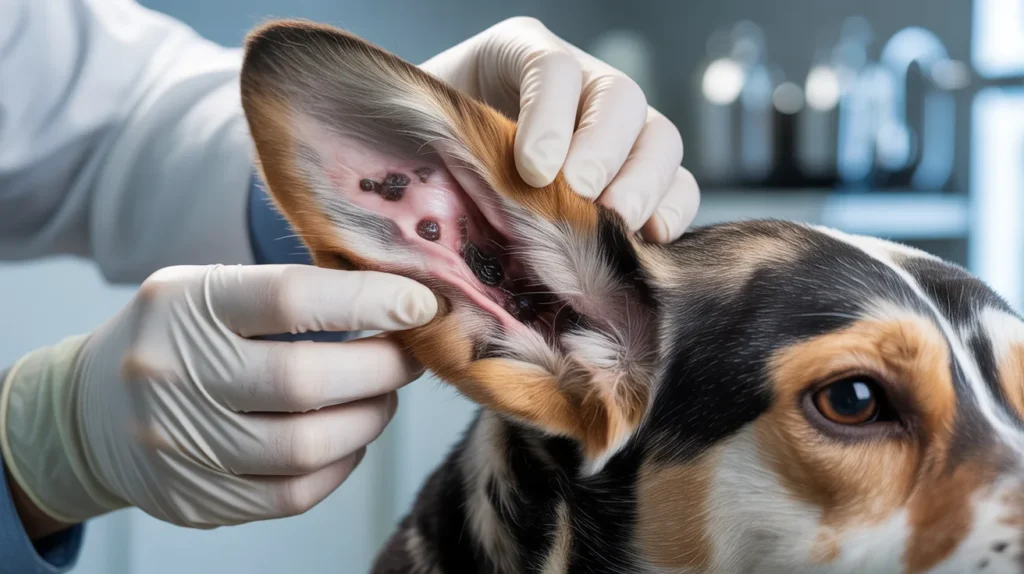
Ear mites are one of the most common external parasite problems in dogs, especially in puppies, rescue dogs, and pets that spend time outdoors. If you have ever noticed your dog shaking its head repeatedly, scratching its ears, or producing a dark, coffee-ground-like discharge, there is a strong possibility of an ear mite infestation.
This guide explains everything about Ear Mites In Dogs, including symptoms, causes, diagnosis, treatment options, prevention strategies, and a real-life case study based on practical experience in pet care cases.
Content
What Are Ear Mites In Dogs?
Ear mites are microscopic parasites known scientifically as Otodectes cynotis. They live inside the ear canal of dogs and feed on ear wax and skin oils. This feeding activity causes irritation, inflammation, and discomfort.
These parasites are highly contagious among animals and spread quickly through direct contact. They are commonly categorized as ear parasites in dogs and are a frequent cause of ear mite infestation in multi-pet households.
If left untreated, ear mites can severely impact overall dog ear health, leading to secondary infections and long-term ear complications.
Symptoms of Ear Mites In Dogs
Early detection is important because symptoms often resemble other ear conditions such as yeast or bacterial infections.
Common symptoms include:
Persistent head shaking
Frequent ear scratching
Dark brown or black ear discharge in dogs resembling coffee grounds
Foul odor from the ears
Redness and inflammation in the ear canal
Sensitivity or pain when the ears are touched
Restlessness and discomfort
One of the most noticeable early signs is itchy dog ears, which often becomes worse at night or during rest periods. In severe cases, untreated infestations can lead to dog ear inflammation and secondary infections.
Causes of Ear Mites In Dogs
Ear mites spread mainly through direct contact with infected animals. Dogs can easily catch them from other dogs, cats, or stray animals.
Common causes include:
Direct contact with infected pets
Shared bedding or grooming tools
Exposure to stray or outdoor animals
Living in multi-pet environments without parasite control
Because of their contagious nature, ear mites are often referred to as ear parasites in dogs that spread rapidly if preventive care is not maintained.
Understanding what causes ear mites in dogs and how to prevent them plays an important role in maintaining long-term ear health.
How Do You Know If Your Dog Has Ear Mites?
Many pet owners ask how to identify ear mites without veterinary assistance. While only a vet can confirm diagnosis, several signs strongly indicate the possibility of infestation.
Key indicators include:
Continuous scratching of ears
Excessive dark ear wax buildup
Head tilting or shaking
Visible discomfort when ears are handled
However, similar symptoms can also occur in yeast infections or bacterial ear conditions. This is why distinguishing ear mites in dogs vs yeast infection differences requires professional diagnosis.
Diagnosis by Veterinarians
Veterinarians diagnose ear mites using a combination of physical examination and microscopic analysis.
They may:
Inspect the ear canal using an otoscope
Collect ear discharge samples
Examine samples under a microscope to detect mites
This process ensures accurate diagnosis and helps differentiate between infections and parasite-related conditions.
Treatment of Ear Mites In Dogs
Treatment is generally straightforward when addressed early. The goal is to eliminate mites, reduce inflammation, and prevent reinfection.
Veterinary Treatment
Veterinarians typically prescribe:
Topical antiparasitic ear drops
Oral or injectable antiparasitic medications
Anti-inflammatory drugs to reduce swelling and discomfort
Many pet owners search for the best medicine for ear mites in dogs recommended by vets, and prescription-based treatments remain the most effective solution.
Ear Cleaning
Cleaning the ears is an important part of treatment. Veterinarians recommend using gentle ear cleaning solutions to remove debris before applying medication.
Deep cleaning should be avoided without professional guidance, as improper cleaning may worsen irritation.
Treating All Pets in the Household
Since ear mites spread easily, all animals in the household should be treated, even if they do not show symptoms. This prevents reinfestation and ensures complete recovery.
Can You Treat Ear Mites In Dogs At Home?
Some pet owners search for how to treat ear mites in dogs at home or natural remedies for ear mites in dogs fast relief.
While mild cleaning and supportive care may help, home treatment alone is usually not enough to fully eliminate the infestation. Veterinary medication is necessary for complete recovery.
Home care may include:
Keeping ears clean and dry
Using vet-approved ear cleaners
Isolating infected pets temporarily
Home remedies without veterinary approval are not recommended, as they may delay recovery or worsen irritation.
Recovery Process
Most dogs show improvement within a few days after starting treatment. However, full recovery may take two to four weeks depending on severity.
During recovery, it is important to:
Complete the full course of medication
Monitor for recurring symptoms
Maintain proper ear hygiene
If untreated, ear mites can lead to chronic infections and long-term damage to dog ear health.
Prevention of Ear Mites In Dogs
Preventing ear mites is easier than treating them. Key preventive measures include:
Regular ear cleaning with safe solutions
Routine veterinary checkups
Use of parasite prevention treatments
Avoiding contact with stray animals
Cleaning bedding and grooming tools regularly
Maintaining strong ear hygiene significantly reduces the risk of reinfection and supports overall ear health.
Real-Life Case Study: Rescue Puppy With Severe Ear Mites
A rescue puppy named Bruno was brought into a shelter with severe ear discomfort. He was constantly scratching his ears, shaking his head, and had thick dark discharge in both ears.
Initially, the condition was suspected to be a bacterial infection. However, microscopic examination confirmed a severe ear mite infestation.
The treatment plan included medicated ear drops, parasite control medication for all shelter animals, and regular ear cleaning under veterinary supervision.
Within 10 days, the itching reduced significantly. After three weeks, Bruno’s ears were completely clean, and his behavior improved dramatically. He became active, social, and comfortable.
This case highlights the importance of early detection and timely treatment of Ear Mites In Dogs.
Conclusion
Ear mites are a common but treatable condition in dogs. Early recognition of symptoms such as itchy ears, dark discharge, and head shaking is crucial for preventing complications. Understanding Ear Mites In Dogs, along with their symptoms, causes, and treatment options, helps ensure faster recovery and better long-term ear health.
With proper veterinary care, hygiene, and preventive measures, dogs can fully recover and remain free from future infestations.
Learn more about the energetic and intelligent Wire Fox Terrier and discover its temperament, care needs, and health tips to better understand this lively breed.
FAQs
What gets rid of ear mites on a dog?
Veterinary-prescribed antiparasitic ear drops and oral medications effectively kill ear mites. Cleaning the ears and treating all pets in the household helps prevent reinfestation.
Can a human get ear mites from a dog?
Ear mites rarely spread to humans. They may cause temporary skin irritation in very rare cases but do not live or reproduce on human skin.
Can I treat ear mites without going to the vet?
Mild cases may improve with cleaning, but full treatment usually requires vet-prescribed medication. Home care alone often fails to completely eliminate ear mites.
Do I need to clean my house if my dog has ear mites?
Yes, wash bedding, vacuum carpets, and clean grooming items to remove mites and eggs. This helps prevent reinfestation and protects other pets in the home.