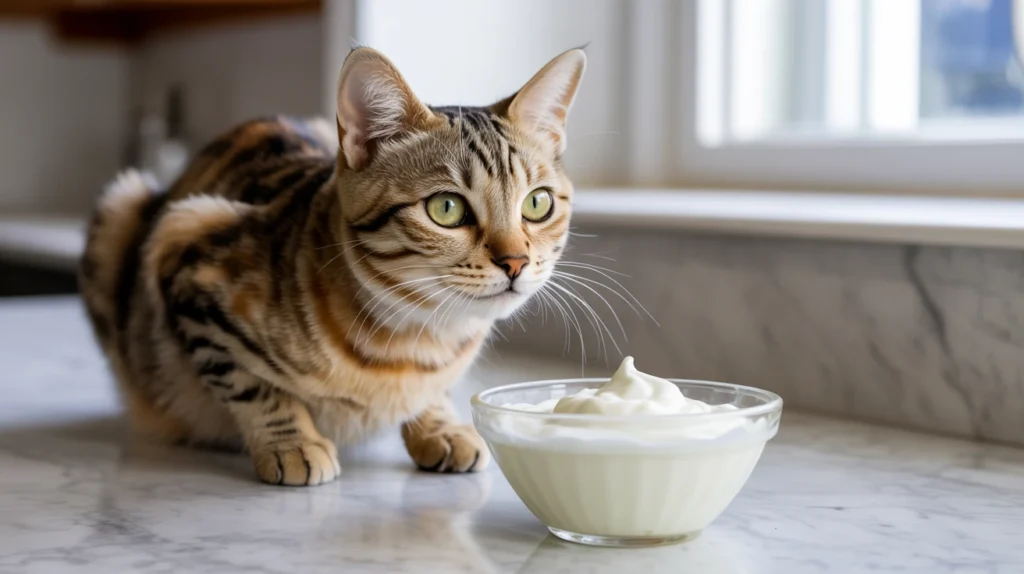
Cats are known for their picky eating habits, and as a pet parent, it’s natural to wonder whether some human foods can be safe for them. One common question we often hear is: Can cats eat yogurt? Yogurt is praised for its probiotics and calcium in humans, but is it beneficial—or even safe—for our feline friends? In this guide, we’ll explore the risks, benefits, and practical tips for introducing yogurt to your cat’s diet.
Content
Can Cats Eat Yogurt?
Before you offer your cat a spoonful of creamy yogurt, it’s essential to understand how cats digest dairy. Most adult cats are lactose intolerant, meaning their bodies cannot properly break down lactose—the sugar in milk and dairy products. Feeding yogurt occasionally in small amounts is usually safe, especially if it’s plain and unsweetened. However, excessive consumption can lead to digestive upset, diarrhea, or vomiting.
Key Takeaway: Yogurt can be a safe occasional treat for adult cats, but it should never replace a balanced, species-appropriate cat food diet.
Health Benefits of Yogurt for Cats
While cats don’t require yogurt, small amounts can offer some nutritional benefits. Here are some key advantages:
Nutrient
Potential Benefit for Cats
Probiotics
Supports gut health and aids digestion, particularly for cats with mild digestive issues.
Calcium
Helps maintain strong bones and teeth.
Protein
Supplements dietary protein intake, especially useful for active adult cats.
B Vitamins
Supports energy metabolism and overall wellness.
Probiotics in yogurt may help cats with sensitive stomachs or mild diarrhea. However, always consult your veterinarian before introducing probiotics or dairy-based supplements into your cat’s diet.
Can Kittens Eat Yogurt Safely?
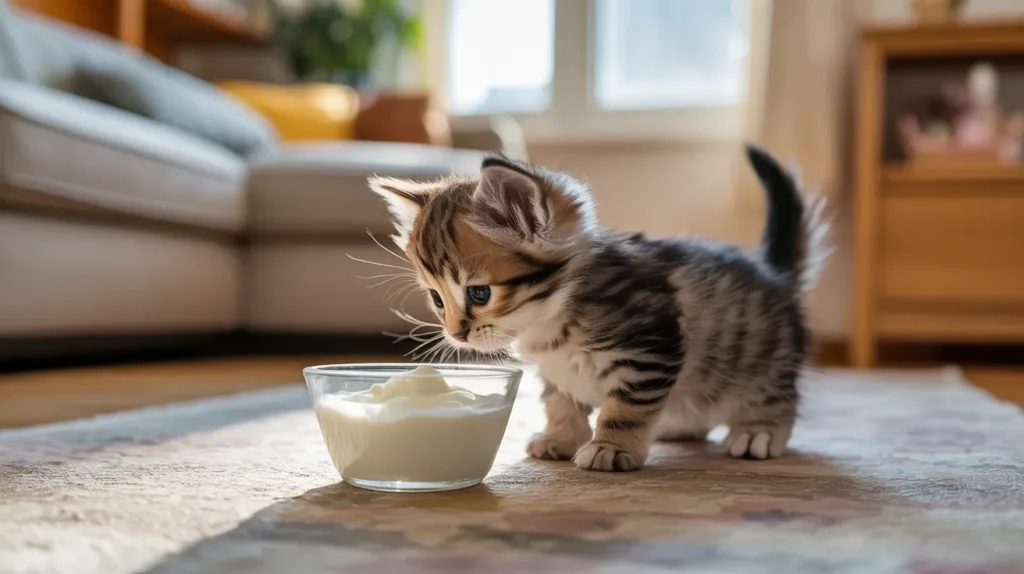
Kittens under six months are particularly sensitive. Their digestive systems are still developing, making them more prone to lactose intolerance. It’s best to avoid giving yogurt to kittens and focus on mother’s milk or kitten-specific formulas.
For adult cats, a small spoonful once or twice a week is generally considered safe.
Potential Risks of Yogurt for Cats
While yogurt has benefits, it’s not without potential downsides:
Lactose Intolerance
Even though yogurt contains less lactose than milk, some cats may still experience stomach upset. Symptoms include diarrhea, bloating, or gas.
Excess Sugar and Artificial Sweeteners
Many flavored yogurts contain sugar or artificial sweeteners like xylitol, which can be toxic to cats. Always stick to plain, unsweetened yogurt.
Fat Content
Full-fat yogurt may contribute to unnecessary calories and weight gain if given frequently. Opt for low-fat versions or smaller portions.
Not all yogurts are created equal. Here’s a quick guide:
Plain Greek Yogurt: Thick, high in protein, and low in sugar; ideal for cats in moderation.
Plain Low-Fat Yogurt: Lower in calories; still a good source of probiotics.
Avoid Flavored Yogurt: Chocolate, fruit-flavored, or sweetened varieties often contain sugar and artificial additives that are unsafe for cats.
How to Safely Introduce Yogurt to Your Cat
Introducing any new food requires caution. Here’s a practical approach:
Start with a tiny amount (about 1/4 teaspoon).
Observe your cat for any digestive issues over 24 hours.
If no negative reactions occur, you may gradually increase the portion slightly.
Limit yogurt to a treat—never make it a staple of the diet.
Pair yogurt with other safe foods or use it as a carrier for medications.
Real-Life Case Study: Bella’s Yogurt Experiment
Bella, a 4-year-old domestic shorthair, was prone to mild digestive issues. Her owner, a pet nutrition enthusiast, introduced plain Greek yogurt as a probiotic supplement.
Method: One small teaspoon added to her evening meal twice a week.
Observation Period: 6 weeks.
Outcome: Bella tolerated the yogurt well, showing improved stool consistency and no signs of digestive upset. Her owner noticed she was more energetic and playful.
This case illustrates that with careful portioning and monitoring, yogurt can be a healthy occasional treat for some adult cats.
Alternatives to Yogurt for Cats
If you’re hesitant about dairy, there are cat-safe alternatives:
Lactose-free yogurt: Specially formulated for pets, containing safe probiotics.
Probiotic supplements: Available in powders or capsules designed for cats.
Other treats: Small pieces of cooked chicken or fish can provide protein without digestive risks.
Conclusion: Can Cats Eat Yogurt?
So, can cats eat yogurt? The answer is yes—but with caution. Plain, unsweetened yogurt can provide probiotics, calcium, and protein as an occasional treat. Always monitor your cat for any signs of digestive upset and avoid flavored or sweetened varieties.
By following safe portioning and observing your cat’s reaction, you can offer a small taste of yogurt as part of a balanced diet. And remember, whenever introducing new foods, your veterinarian’s guidance is invaluable.
“If you’re curious about safe fruit treats for pets, check out our guide on Can Dogs Eat Oranges? to see which fruits are healthy for your canine friends.”
FAQs About Can Cats Eat Yogurt
What kind of yogurt can cats eat?
Plain, unsweetened yogurt or Greek yogurt is safe for cats in small amounts. Avoid flavored or sweetened varieties.
Is yogurt a laxative for cats?
Yogurt may mildly ease digestion for some cats, but it’s not a true laxative. Feed in small amounts only.
How much yogurt can I give a cat?
A tiny spoonful (1/4–1 teaspoon) once or twice a week is safe for adult cats.
Can I let my cat lick yogurt?
Yes, a small lick of plain yogurt is fine occasionally. Always observe for digestive issues.